




How AI Will Reshape Jobs and What Job Seekers Need to Know

Robots rarely walk in and “take a job” all at once. More often, AI changes the job first. It takes over a task, speeds up a workflow, removes a bottleneck, or raises the skill level expected from everyone doing the work.
That difference matters. The future of work will not be split neatly between people and machines. It will be split between tasks that machines can do well, tasks people still do better, and work that combines both.
For job seekers, the question is not only “Will this career survive?” The better question is, “How will this work change, and how can I stay useful as it changes?”

AI will replace tasks before it replaces whole careers
Most jobs are bundles of tasks. A restaurant manager schedules shifts, orders supplies, handles customer complaints, trains staff, checks safety rules, and solves random problems all day. AI may help write schedules or forecast stock needs, but it does not replace the whole role overnight.
The same pattern shows up across many fields.
AI can draft text, summarize calls, identify defects on a production line, answer basic customer questions, sort resumes, route delivery vehicles, and generate code suggestions. Robots can lift, sort, pack, weld, clean, and inspect.
Those are real changes. They can reduce the number of people needed for some roles. They can also create new work around supervision, maintenance, quality control, data, safety, training, and customer experience.
The biggest risk sits with work that has three traits:
Repetitive steps
The same task happens the same way many times.
Clear rules
The work has predictable inputs and outputs.
Digital or structured data
The machine has enough examples, records, images, or instructions to learn from.
That does not mean every repetitive job disappears. Physical environments are messy. Customers can be unpredictable. Rules change. Safety matters. But when the work is predictable and high volume, employers have a stronger reason to automate it.
A useful way to think about risk is to break a job into pieces:
Job task | Risk from AI or robots | Why it matters |
Entering data from standard forms | High | The work is repetitive and digital |
Moving boxes in a controlled warehouse | Medium to high | Robots can work well in mapped spaces |
Handling angry customers | Medium | AI can assist, but human judgment still matters |
Diagnosing a complex field repair | Lower | The environment and problem can change fast |
Leading a team through change | Lower | Trust, judgment, and communication are hard to automate |
This task-level view is more useful than panic. It shows where to adapt.
The jobs most likely to change first are not always the ones people expect
Public fears about robots often focus on factory floors. Manufacturing will keep changing, but AI is also affecting white-collar and service work.
Some of the fastest changes are happening in jobs that rely on information. AI tools can read, write, classify, search, compare, and summarize at a speed that people cannot match. That affects entry-level work in fields such as administration, customer support, marketing, legal support, finance operations, insurance, HR, and software development.
At the same time, robots are improving in warehouses, agriculture, transportation, food service, construction support, and healthcare logistics. The machines are not perfect. They still need controlled settings, maintenance, human oversight, and backup plans. But progress does not need to be perfect to change hiring.
Three types of work deserve close attention.
Routine office and administrative work
Scheduling, basic bookkeeping, invoice processing, document sorting, data cleanup, and standard email replies are already easier to automate than they used to be.
This does not remove administration as a career. It does raise the bar. People in these roles may need to become better at coordinating systems, checking AI output, managing exceptions, protecting sensitive information, and communicating clearly with people who need help.
Customer service and sales support
Chatbots can handle simple questions, order updates, password resets, and scripted product help. Voice AI is also improving.
Still, human support remains valuable when stakes are high, emotions are involved, or the situation does not fit a script. The future role may involve fewer simple tickets and more complex cases. That can make the work more demanding, not easier.
Entry-level knowledge work
AI can now produce drafts, outlines, summaries, research notes, spreadsheet formulas, and basic code. That changes the first rung of many career ladders.
The concern is not only job loss. It is also training loss. If companies automate junior tasks, new workers may get fewer chances to learn the basics. Strong job seekers will need to show they can use AI tools while still understanding the work underneath.

Human skills will matter more, not less
AI is raising the value of certain human skills because machines make average output easier to produce.
If anyone can generate a passable email, report, design mockup, or code snippet, the advantage shifts to people who can ask better questions, judge quality, understand context, and make decisions.
The strongest skills for the next phase of work include:
Clear communication
AI can draft words, but people still need to explain, persuade, listen, and resolve conflict.
Judgment
AI can suggest options. People must weigh trade-offs, ethics, safety, timing, and trust.
Adaptability
Tools will change often. Workers who learn quickly will recover faster from disruption.
Domain knowledge
A nurse, mechanic, electrician, teacher, claims adjuster, or chef with AI tools has an edge over someone who only knows the tool.
Problem framing
AI works better when the human asks a precise question and defines what a good answer looks like.
Quality control
AI can be wrong, outdated, biased, or overconfident. Someone has to check the work.
These skills are not soft in the sense of being optional. They are hard to automate because they depend on context.
For example, a robot may carry supplies in a hospital. AI may help summarize patient notes. But a healthcare worker still has to notice when a patient seems confused, anxious, or in pain. That kind of awareness matters.
In the skilled trades, AI can help with estimates, diagnostics, training videos, and inventory. But a plumber or HVAC technician still works in real homes, with old systems, tight spaces, missing parts, and customers who need trust as much as technical skill.
This is why the future is not only about learning to code. Coding can be useful, but the broader goal is learning how to work with intelligent tools in a specific field.
What job seekers should do now
Searches like “job seekers AI” and “robots jobs” often come from the same worry: people want to know how to stay employable. The answer is practical. Build proof that you can do valuable work with the tools that are changing your field.
Start with the work you already know or the field you want to enter. Then study where AI touches it.
Audit the tasks in your target role
Pick a job posting and break it into tasks. Mark each task as low, medium, or high exposure to automation.
Ask:
What parts are repetitive?
What parts require judgment?
What tools are employers already naming?
Where does accuracy matter?
Where does human trust matter?
This makes career planning less emotional. A role with many automatable tasks may still be a good path if you can move toward oversight, troubleshooting, client work, safety, or technical support.
Learn the tools, but do not chase every tool
The tool list will keep changing. Do not try to master everything.
Instead, learn common categories:
AI writing and research assistants
Spreadsheet and data tools
Workflow automation tools
Industry-specific software
Basic prompting and verification
Robotics or equipment interfaces, if relevant to the role
The goal is not to say, “I used AI.” The goal is to say, “I used AI to reduce errors, create a better first draft, compare options, explain a problem, or finish work faster while checking the result.”
Build a portfolio of AI-assisted work
A portfolio helps even outside creative fields. It can include:
A before-and-after process improvement
A sample report with notes on how you checked AI output
A small data project
A customer service script and escalation guide
A maintenance checklist for a machine or system
A training guide for a common task
Keep private data out of it. Use sample information or your own projects.
What matters is proof. Employers want people who can learn, use tools responsibly, and explain their thinking.
Get better at verifying information
AI can sound confident when it is wrong. That creates risk in hiring, healthcare, finance, law, education, engineering, and almost every field.
A good AI user checks:
Source quality
Dates
Math
Missing context
Legal or safety limits
Bias in the output
Whether the answer matches the real situation
This is one of the clearest ways to stand out. Do not present AI output as truth. Present it as a draft, suggestion, or starting point that you tested.

Some careers will grow because of AI
Automation does not only remove work. It changes demand.
When companies adopt AI and robotics, they need people to install, repair, manage, explain, sell, secure, and improve those systems. They also need people in roles that machines cannot handle well.
Likely growth areas include:
Robotics maintenance and field service
Cybersecurity and data privacy
AI operations and quality review
Healthcare and elder care
Skilled trades
Renewable energy and electrical work
Education and training
Logistics coordination
Safety and compliance
Human-centered customer roles
The job market will reward people who sit between technology and real-world needs. That might be a warehouse lead who understands robotics. It might be a teacher who uses AI to create practice materials. It might be a mechanic who uses diagnostic software but still knows how machines sound, smell, and fail.
The “middle” is powerful. You do not always need to build AI. You can be the person who knows how to apply it safely and usefully.
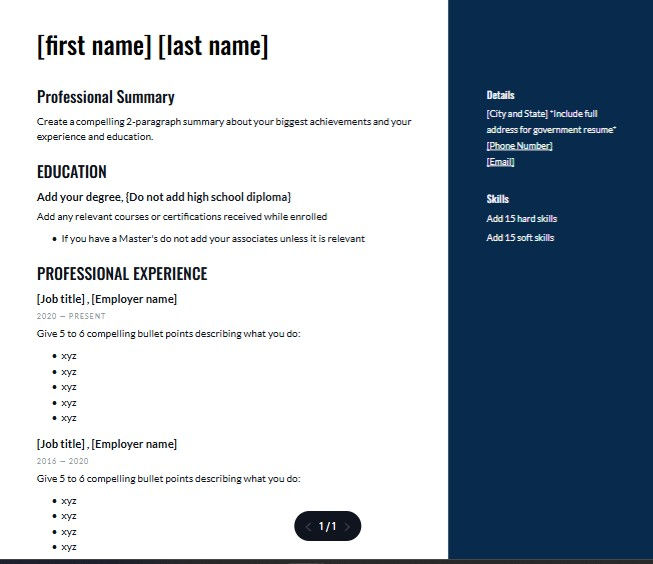
The resume should show adaptation
A resume for the AI era should not be stuffed with buzzwords. It should show results and tool comfort.
Weak wording sounds like this:
Used AI tools
Familiar with automation
Helped improve processes
Stronger wording is more specific:
Created a checklist to review AI-generated customer replies for accuracy and tone
Used spreadsheet automation to reduce manual copy-and-paste work
Trained new team members on safe use of barcode scanners, routing software, and inventory tools
Compared AI-generated summaries against original records before sending reports
Specific examples build trust. They show that a person does not just use new tools, but thinks clearly about them.
Education and training will become more flexible
A four-year degree will still matter in many fields. But AI is also increasing the value of shorter training, certificates, apprenticeships, and practical demonstrations of skill.
For many roles, the best path may combine:
Formal education
On-the-job training
Industry certificates
Community college programs
Apprenticeships
Personal projects
Short courses on specific tools
The choice depends on the field. A nurse, electrician, teacher, accountant, or engineer faces different licensing and training rules. Job seekers should check real job postings in their state and industry before choosing a program.
Avoid any course that promises guaranteed results or uses fear to sell. Good training teaches real skills, includes practice, and helps students understand limits and risks.
A smart learning plan has three parts:
A core skill
This is the main work people pay for, such as repair, care, analysis, design, writing, sales, teaching, or operations.
A technology layer
This includes AI tools, software, machines, or data systems used in the field.
A human layer
This includes communication, ethics, reliability, teamwork, and judgment.
Workers who build all three will be harder to replace than workers who rely on only one.

The right mindset is prepared, not panicked
AI will remove some jobs. It will change many more. It will also create work that feels normal a few years from now, just as past technologies did.
The people most at risk are not only those in automatable jobs. They are also the ones who stop learning, ignore new tools, or assume their current role will stay the same.
The safer path is practical:
Learn how AI affects your target field.
Build strong human and technical skills.
Practice with tools, but check their work.
Move toward tasks that require judgment, trust, safety, creativity, and real-world problem solving.
Keep evidence of what you can do.
The future of work will belong to people who can work with machines without becoming dependent on them. AI may change the shape of a career, but preparation still gives workers choices.


Comments